
Young People at the Centre of the NextGen Project: Key Findings from the Community Needs Assessment
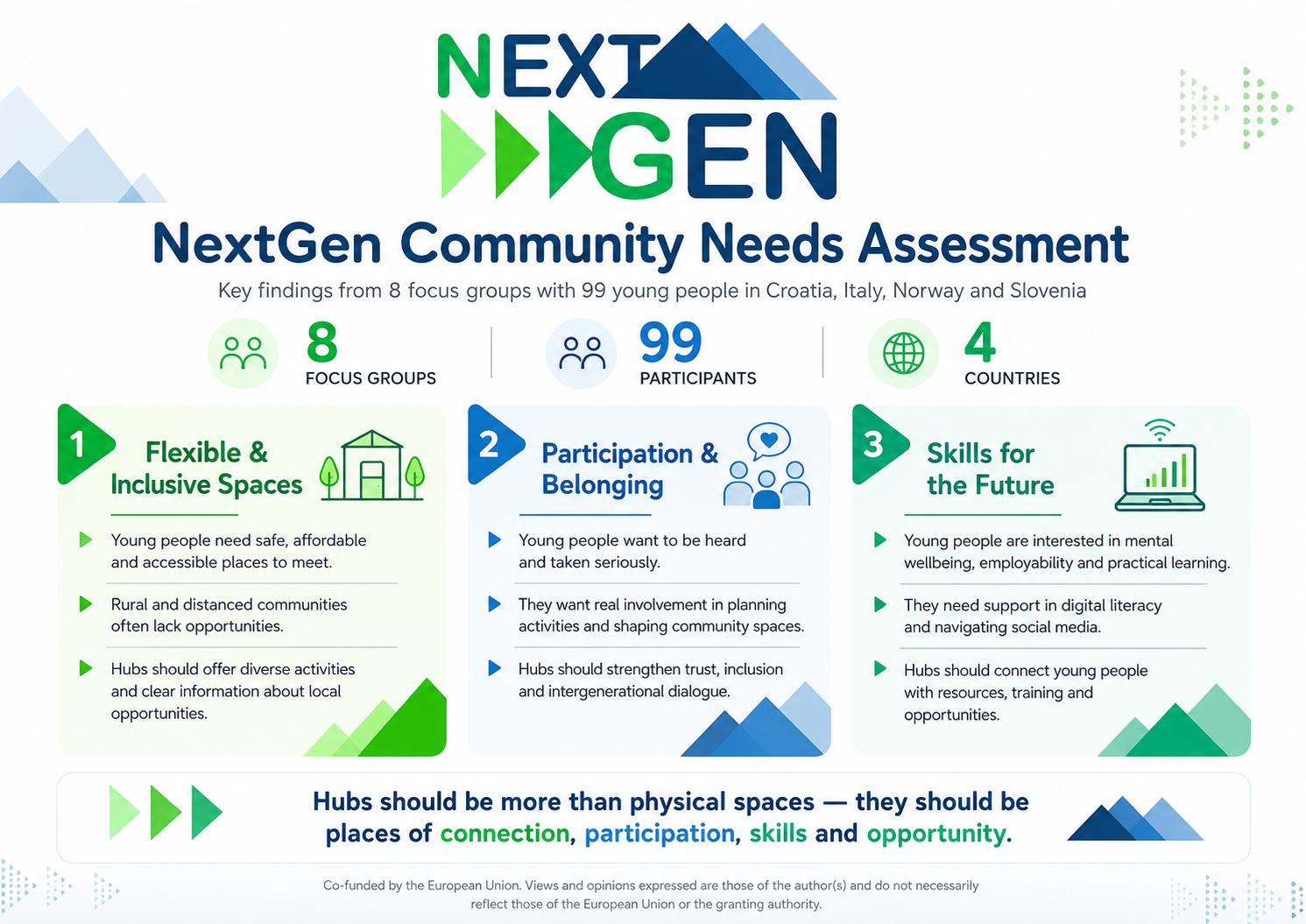
As part of the NextGen project, partners conducted eight focus groups with 99 young people across Croatia, Italy, Norway and Slovenia. The aim was to better understand the realities, needs, aspirations and challenges of young people from geographically distanced communities and socially marginalised groups.
The focus groups explored young people's educational and cultural interests, barriers to civic engagement, access to digital resources and ideas for future community-based activities. The findings will directly inform the development of guidelines for humanity and civic participation hubs within the NextGen project.
Across all four countries, young people shared similar concerns. They pointed to a lack of accessible and affordable spaces for meeting, learning and spending free time, especially in rural and distanced communities. Many also highlighted limited information about existing opportunities, pressure connected to school and everyday responsibilities, and the need for adults and decision-makers to take young people's voices more seriously.
Three key priorities emerged from the assessment.
First, young people need flexible and inclusive spaces. These should be safe, affordable and accessible places where they can study, socialise, create ideas, take part in workshops, attend cultural events and gather spontaneously.
Second, youth hubs should strengthen participation and belonging. Young people want to be recognised as equal members of their communities, involved in planning activities and given real opportunities to express their opinions and influence decisions.
Third, activities should support skills for the future. Participants expressed interest in practical learning opportunities connected to mental wellbeing, employability, digital literacy, critical use of social media and access to reliable information.
The Community Needs Assessment shows that youth hubs should be more than physical spaces. They should become entry points to community, voice, skills and opportunity — places created with young people, not only for them.
The findings will now support the development of hub guidelines that respond to the real needs of young people and help create more inclusive, participatory and connected communities.